We Are Almost Certainly Wrong
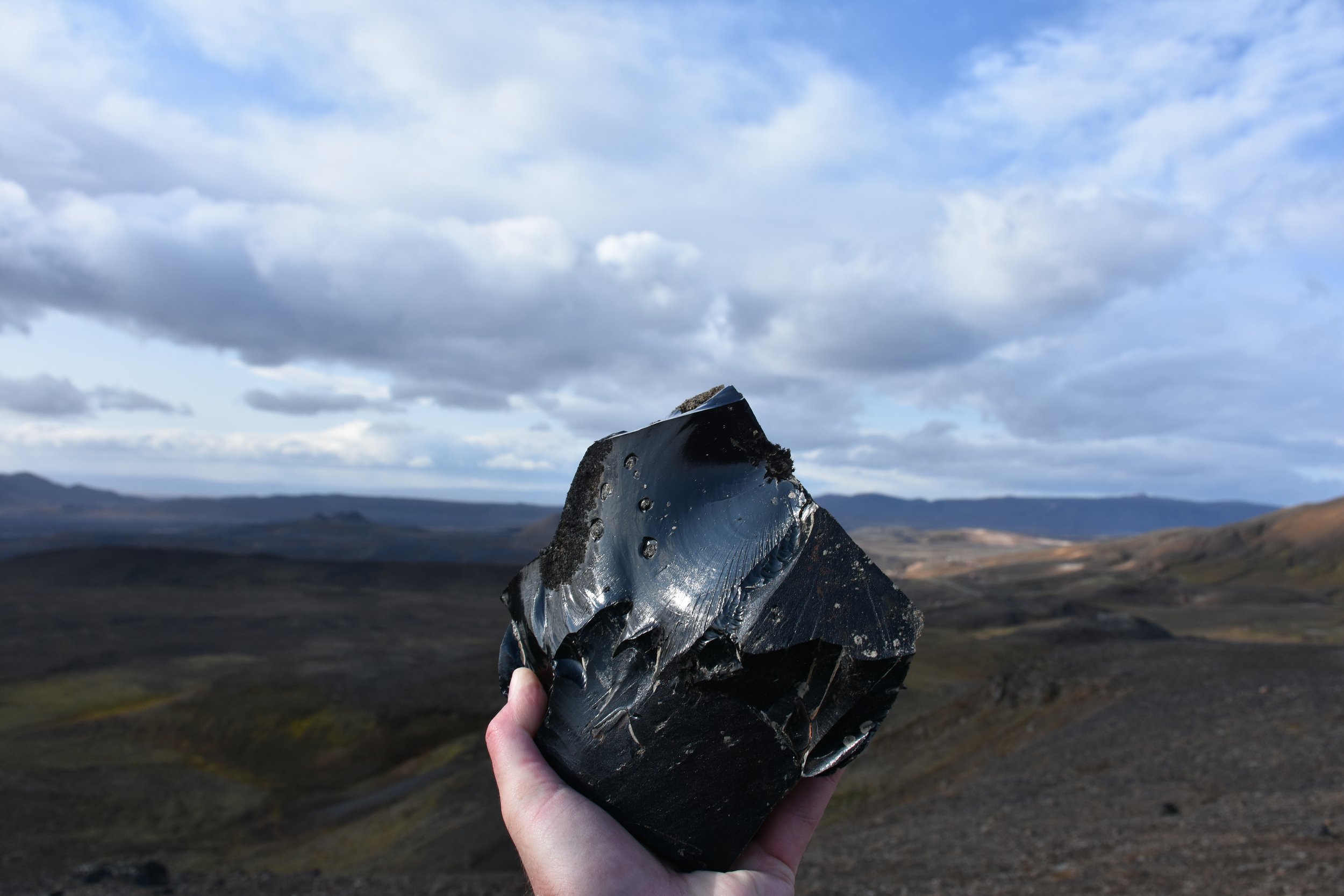
This work began in the volcanic landscape of Hrafntinnuhryggur, Iceland, through a collaboration with volcanologists Dr Fabian Wadsworth and Dr Ed Llewellin. Their research hypothesises that the formation of obsidian is a process governed by impulse fracturing; deep underground, volatile, viscous magma undergoes successive cycles of explosive fracturing under extreme pressure, which fuse back together as it moves toward the surface. When I asked the volcanologists how they verified this hidden, subterranean process, their response was: "We don't. We are almost certainly wrong."
This admission of scientific humility became the conceptual anchor for the work. It is a plea against monolithic dogmatic concepts. The phrase is also a quiet acceptance of fragility, acknowledging that our impact on the world can be destructive but is mutable.

Hrafntinnuhryggur 65.704036, -16.717192 Icelandic for Raven flint ridge in northern Iceland. As the epic landscape stretched out around us, dark glossy black shards crunched underfoot. This site is special to volcanologists and to Icelandic history, as one of the best sources of black obsidian. A series of five outcrops progressively more developed makeup this ridge.

The Physical Form
A raw two-kilogram block of Icelandic obsidian was carved using diamond wheels. I eroded all the concave marks from previous fractures and impacts on the stone to sculpt a minimum convex surface form; a smooth hyper-refined egg.
This object represents an artificial imposition of order. It is a fragile facsimile of completeness, mirroring both scientific reductionism and the rigid boundaries we construct in our lives. The highly polished surface creates an illusion of permanence, a solid state that masks the internal stresses inherent in the material.

Fracturing
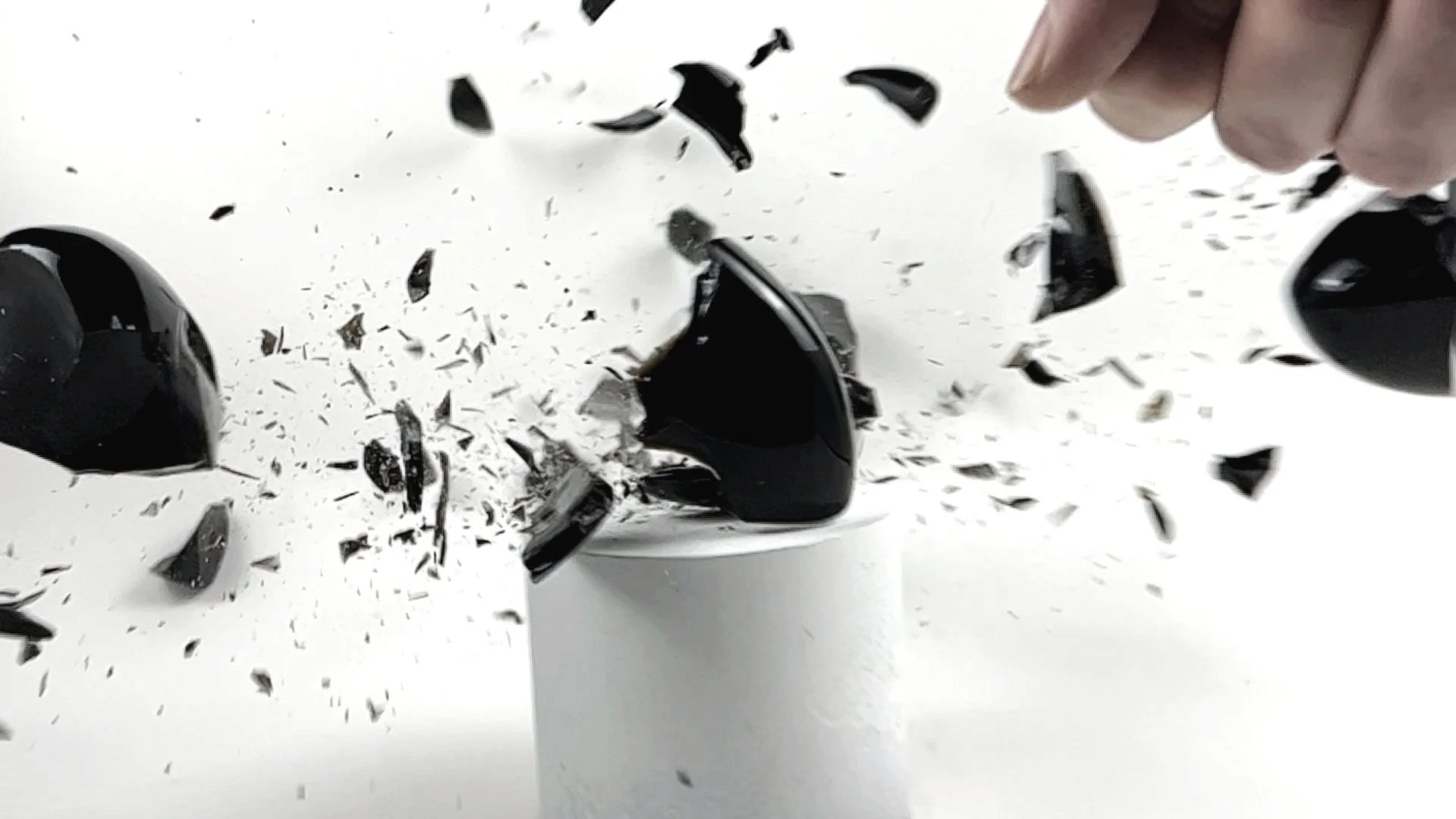
The work transitions through a deliberate act of destruction. Impacting the obsidian egg initiated a catastrophic descent into disorder, while simultaneously acting as a liberating breakup of a previous boundary.
The resulting shards are a direct memory of that impact. They carry the conchoidal fracture lines that emerged from the shockwave traveling through the glass. This physical shattering serves as an intimate, reflective meditation on shared human error, hinting at the moments where our structures collapse and leave us navigating new territory. The act of breaking is both destructive and liberating, exposing a new complex interior that was previously homogenous and isotropic.


Digital Reconstruction
Following the impact, the work shifted into a digital process. This phase represents a meticulous ritual of restoration, an ordering of chaos that mirrors the slow work required to overcome profound difficulties in life. I scanned twenty-seven of the major elements capturing their geometry with sub-millimetre precision using structured light 3D scanning.
Numerous small, fractured pieces were too minute to be scanned. These missing components make the digital reconstruction an imperfect monument to the original whole. By digitally piecing the primary scans back together, the surface curves now flow continuously, yet they are mapped alongside surface cracks and permanent voids.
The Weightless Artifact
The work exists as a resolved digital artifact. This state is not an incomplete test, but a definitive outcome. This leaves us with a weightless, contained digital object. The work raises a question about the relationship between the volatile physical glass and this infinite digital memory. It stands as a completed phase, a monument to a state of transition, before any future iterations attempt to reconnect this digital weightlessness with the physical world.